
Kerala, India
Homeopathy as Primary Medicine
I went to India to experience what practice is like in a Kerala Government Homeopathic Clinic. My host was Dr. Muhammed Rafeeque, a Medical Officer in the Department of Homeopathy, Government of Kerala. He has authored a number of books, presented papers in many international seminars, and taught around the world — including sessions for my study group, CHE.
There are typically about 100 patients a day treated in the clinic, solely by Dr. Rafeeque. Most patients came with everyday illnesses such as colds, flu, sinusitis, frozen shoulder, and tennis elbow. Each visit was approximately 5 to 10 minutes. Being there for a couple of weeks gave me the opportunity to see repeat visits.
What a difference between homeopathic treatment being a primary treatment option in India versus a secondary one in most of the world — with the exception of France and Germany, where 80% of doctors prescribe homeopathy.
There are approximately 200,000 Homeopaths in India, with homeopathy being practiced by 3rd and 4th generation practitioners. In Canada, there are approximately 1,000 homeopaths — 500 being regulated in Ontario.
I attended the Cinchonia 2017 National Predictive Homeopathy workshop with Dr. Prafull Vijayakar — called “The Lion of Homeopathy.” Homeopathic practice relies heavily on genetics. What is in our DNA, based on inherited predispositions and acquired susceptibilities, is what we address through treatment.

Dr. Muhammed Rafeeque and Marilyn Freedman at the government homeopathic dispensary, Kunnukara, Kerala, India

Kunnukara Government Dispensary in Kerala, India
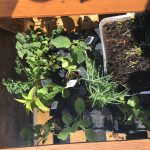
Seeds of Hope Foundation rooftop garden, Carrot Common, Toronto

Rooftop beehives — surprisingly gentle honey bees
Toronto, 2017
Organic Gardening with Homeopathy
It was through my dear friend and colleague, Debby Bruck, that I first met Vaiskunthanath Das Kaviraj — a homeopath with a decade of experience in an Indian rural clinic who had travelled the world teaching homeopathy. In 1986, a friend asked him to treat an apple orchard with a virulent rust, inspiring years of research that became his book, Homeopathy for Farm and Garden.
I had the opportunity to apply homeopathy with the Seeds of Hope Foundation Organic Farming group on the rooftop of the Carrot Common on the Danforth. I taught the group about remedies for themselves and their garden — first aid for summer bugs, making teas, lotions, and oils. We treated aphids, withering plants, broken branches, and the soil.
It was a great experience — a reason to leave my office weekly and do homeopathy outdoors, which I love. As I write this I want to mention that both my dear friend Debby, and Kaviraj, have departed this world.
🐝 The Bees are Dying
There are over 360 species of bees in Toronto. According to Live Green Toronto, native bee species are even more threatened than honey bees — and when these species are lost, they cannot be replaced.
Butterflies are also at risk — there are 112 species in Toronto. The Monarch butterfly is classified as Special Concern provincially and endangered federally. The Karner Blue Butterfly is locally extinct.
Resources: livegreentoronto.ca · davidsuzuki.org (Toronto Plant Guide for attracting Pollinators)